
Introduction
New homes for Stansted Mountfitchet and Birchanger
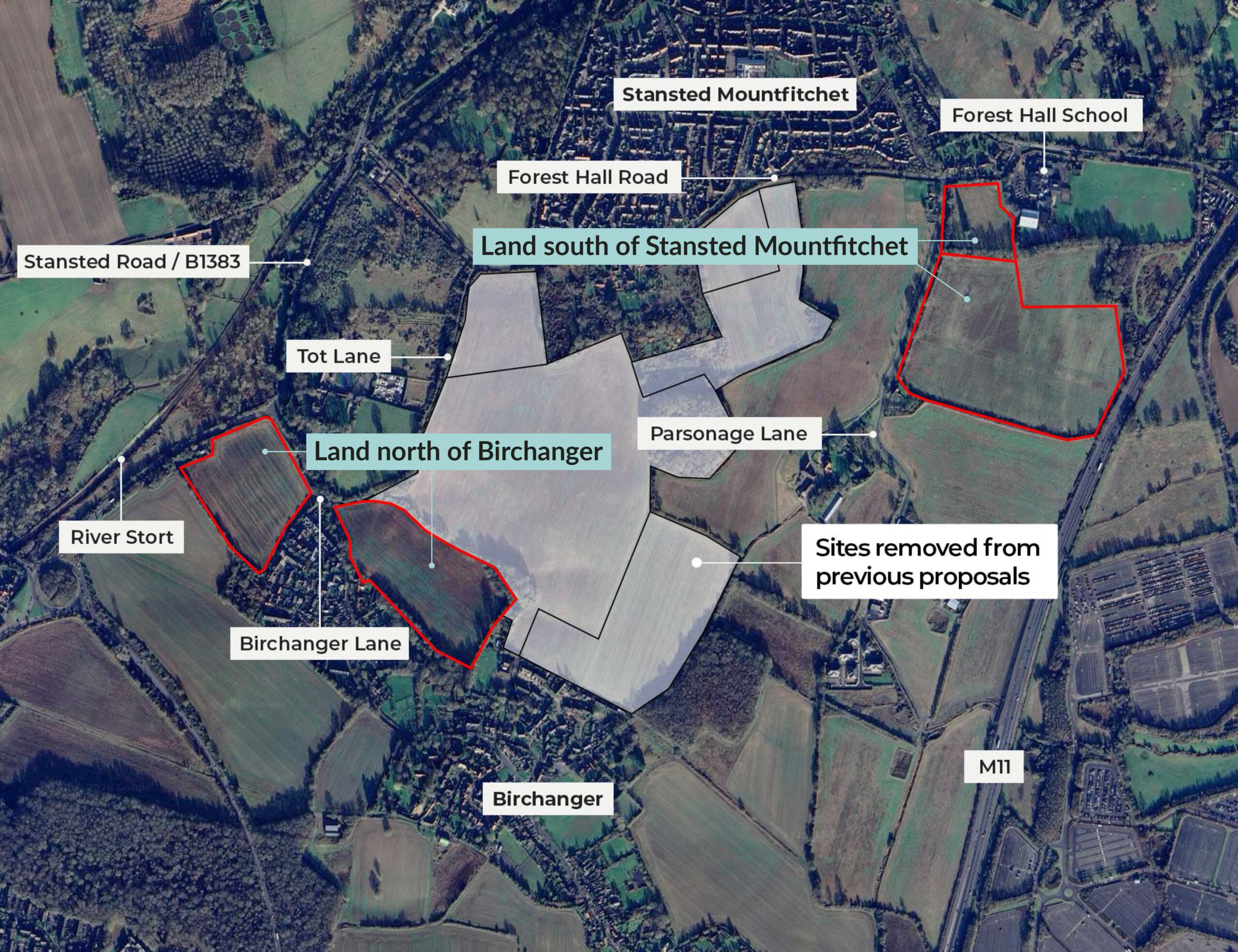
City & Country have now submitted plans for a landscape-led development on Land South of Stansted Mountfitchet and Land North of Birchanger, both of which will deliver much needed high-quality new homes, including a significant number of affordable homes. The proposals also include an extensive public realm comprising of community-led gardens and landscaped open spaces, alongside new and enhanced pedestrian and cycle links to improve connectivity to surrounding areas. The development will benefit both new residents and those already living in the nearby villages.
The masterplan aspires to set a benchmark for exemplar design, which is both sensitive to its surroundings and forward-thinking in its sustainability credentials.
To realise this, City & Country has appointed the award-winning architects – Feilden Clegg Bradley Studios, renowned for their innovative and environmentally conscious designs.
City & Country have enhanced the proposals following the previous two engagement programmes in November 2024 and September 2025. City & Country has listened to residents, councillors and officer feedback to refine the development proposals to provide a scheme more in keeping with the local context, while still providing tangible community benefits from these proposals.
Following our most recent round of engagement on updated proposals for Land South of Stansted Mountfitchet and Land North of Birchanger, City & Country have provided an update to this website to answer any remaining questions you may have about the proposals. For a more in-depth dive into the submitted applications, please visit: Stansted & Birchanger
Register
Keep up to date
Sign up and receive emails keeping you up to date during the process of the project.
Vision
Distinctive and contemporary rural communities
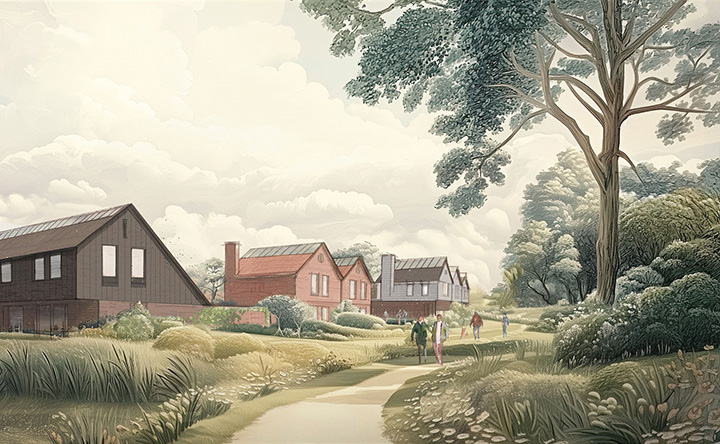
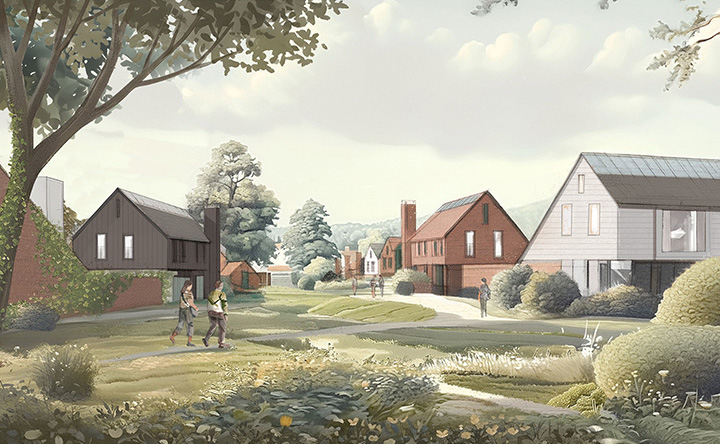
The vision for these sites is to create distinctive, contemporary rural communities that are intrinsically connected to the unique landscape of Essex. These are not merely places to live, they are environments that celebrate local character, nurture a sense of community, and enrich both ecological and visual quality. Each development should respond thoughtfully to its surroundings, drawing inspiration from the history, natural features, and cultural identity of the area.
- The proposals aim to be a trailblazer for modern rural housing which are defined here as clusters of homes surrounded by an immersive landscape.
- Each new village extension should respond directly to the topography, orientation, and outlook of each of the sites.
- The overall masterplan should actively create a series of appropriately scaled connected communities.
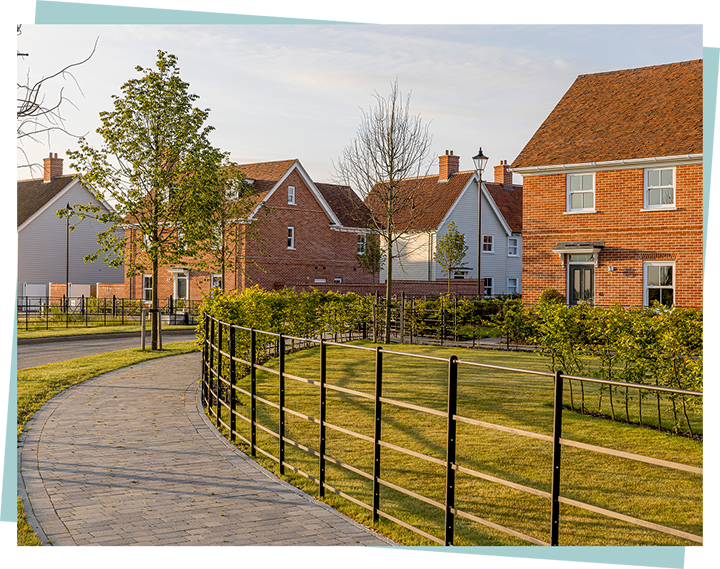
- The character of the homes should be a contemporary interpretation of the Essex vernacular houses and farmsteads.
- The historic character of Birchanger and Stansted and the surrounding villages should be expressed through the informality of the clusters of homes around lanes, greens and courts.
- All areas should be pedestrian dominated with car parking located on plot within parking courts and yards.
This vision has been developed into a series of parameter plans and a design code that set out how the sites should be designed and what rules must be followed to ensure this vision is met.
Determining Grey Belt and Green Belt
What is Grey Belt?
Grey Belt is the potential reclassification for any Green Belt site (including both previously developed / brownfield and undeveloped land) that, according to the Government’s definition, can be shown to ‘not strongly contribute’ to three of the five purposes of the Green Belt.
- To check the unrestricted sprawl of large built-up areas.
- To prevent neighbouring towns merging into one another.
- To preserve the setting and special character of historic towns.
The five purposes of Green Belt
The Green Belt is a planning designation that gives land around towns and cities special protection. Its purpose is to:
- Check the unrestricted sprawl of large built-up areas.
- Prevent neighbouring towns merging into one another.
- Assist in safeguarding the countryside from encroachment.
- Preserve the setting and special character of historic towns.
- Assist in urban regeneration, by encouraging the recycling of derelict and other urban land.
The Golden Rules around releasing Green Belt Land
The National Planning Policy Framework (‘NPPF’) sets out that where Green Belt land is released for development through plan making or review, certain “Golden Rules” apply. In particular, the Golden Rules apply where major development involving housing is proposed on such sites:
- Affordable Housing – For Uttlesford, at least 50% of all housing must be provided as affordable housing.
- Infrastructure – New development must contribute to necessary local infrastructure.
- Green spaces – Development must include improvements to existing green spaces or provide new green spaces which are accessible by the public (i.e. within walking distance from new homes). They should contribute positively to the landscape setting of the development and must either meet local standard for green space (if applicable) or relevant national standards.
Explore
Read more about the scheme
Creating new homes and community spaces
Answers to frequently asked questions
Making better places for local communities
Indicative proposed timeline
How will the project move forward?
November / December 2024
First round of engagement launched.
Early 2025
Reviewed community feedback and updated proposals where appropriate.
Spring 2025
Ongoing conversations with the council regarding the plans and updating them ahead of a second round of engagement.
September / October 2025
Second round of engagement takes place.
November 2025
Applications submitted. Statutory and public consultation underway until December 2025.